
what she can hear
an ekphrasis: art by Pál Szinyei Merse, Hungary

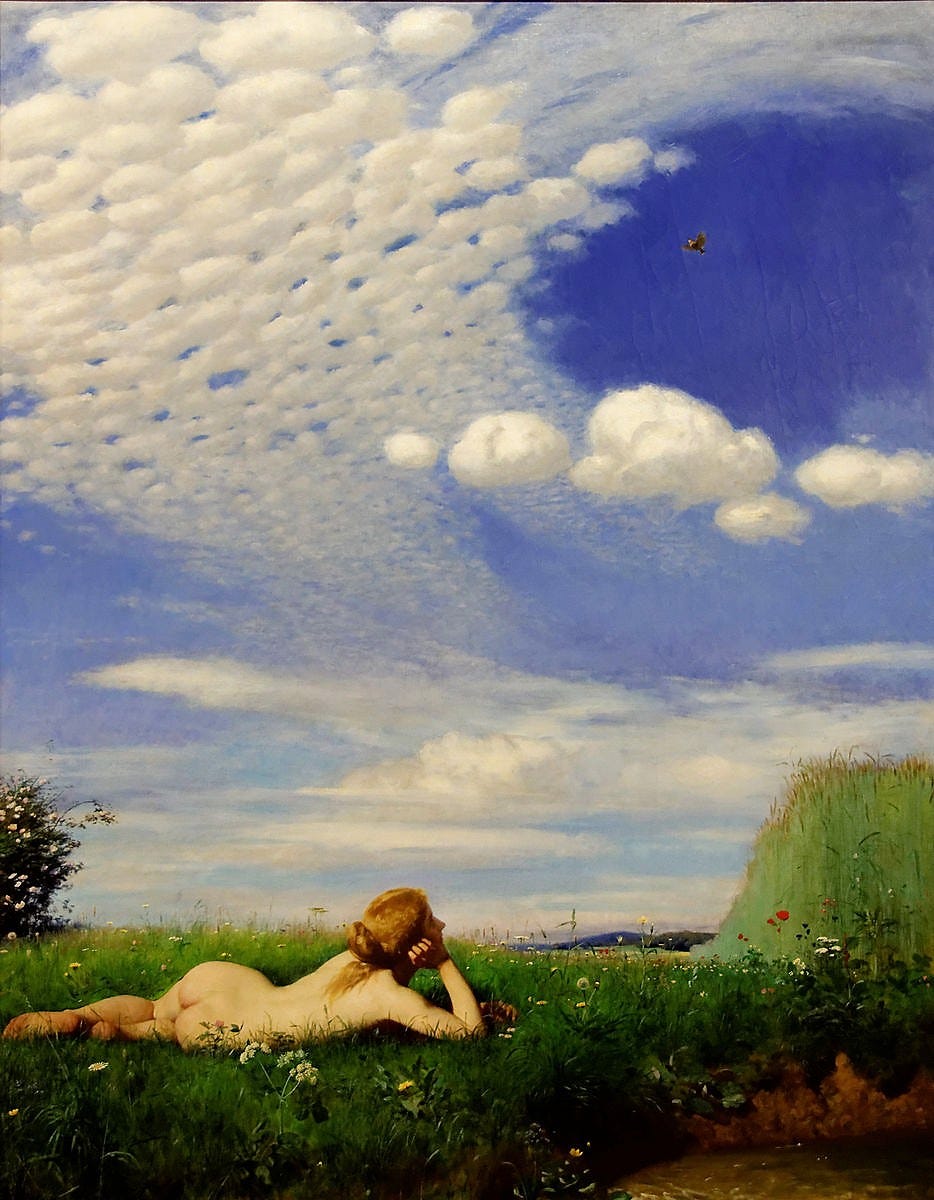
Hungarian artist, Pál Szinyei Merse (1845-1920) painted the above in 1882. On a small screen, it might be missed, but the lark is in the patch of blue sky in the upper right quadrant of the painting.
Villanelle on how to view a nude

Coming upon her from the rear,
be no creep, no dark surprise.
Better to mind what she can hear:

the song of the lark against the sky!
You know it, too, since you were young.
Only then, observe her from the rear.

The times at school, when lovelies did pass by,
that sweet melody beneath the pounding drum,
it let you know what they could hear.

The sky, too, shimmers, a beauty of its own;
swirls of white, the brilliant blues, advise
how close behind you may near.

Though her form is certainly lovely,
she, like you, is happy and free
to follow the music she cares to hear.

Yes, as winds rise, thunder rolls,
a mutual beat may sometimes sound,
but if you view her from the rear,
best not neglect what she can hear.
If only lasses felt so free
to lie beneath a sky so blue
on a carpet of grass so green.
Some of the most beautiful passages in the English language were translated from 19th century Russian. The words below were translated by Constance Garnett from Gogol’s story “The Fair at Sorochintsy” (from Evenings Near the Village of Dikanka). The painting made me think of it.
“How intoxicating, how magnificent is a summer day in Little Russia. How luxuriantly warm the hours when midday glitters in stillness and sultry heat and the blue fathomless ocean covering the plain like a dome seems to be slumbering, bathed in languor, clasping the fair earth and holding it close in its ethereal embrace! Upon it, not a cloud; in the plain, not a sound. Everything might be dead; only in the heavenly depths a lark is trilling, and from the airy heights the silvery notes drop down upon adoring earth, and from time to time the cry of a gull or the ringing note of a quail sounds in the steppe.”